
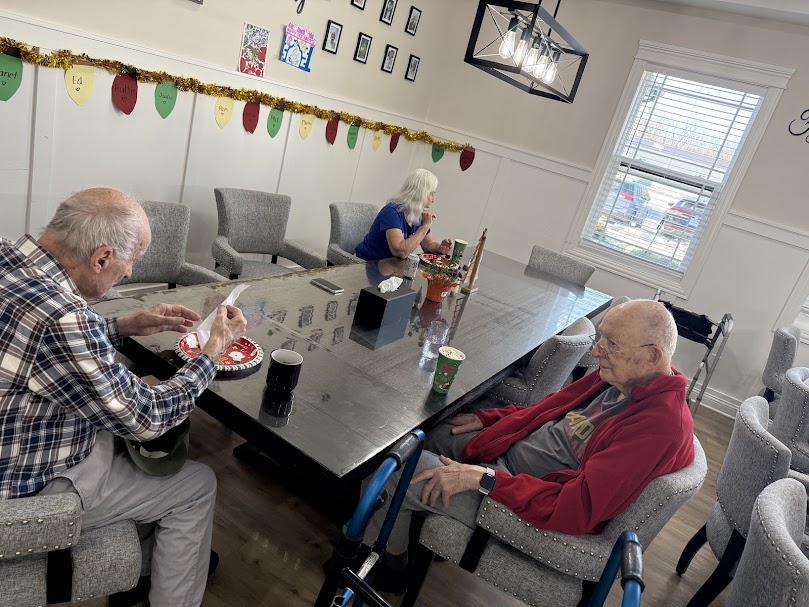
The holidays are meant to feel joyful—family dinners, traditions, a full calendar, a full home. But when you’re caring for an aging parent or spouse, this season can quietly become the most exhausting time of the year.
If you’re the primary caregiver, you’re likely juggling everything at once: meals, medications, safety, appointments, shopping, guests, travel planning, and emotional pressure to “make it all work.”
Caregiver stress during the holidays is common—especially in Crown Point, where winter weather, busy schedules, and family travel can make caregiving harder.
Short-term senior care (often called respite care or temporary care) can be a practical way to protect your loved one’s wellbeing and protect your own health. And if you’re exploring short-term support options locally, Crown Point Assisted Living can be one of the resources families consider when they need temporary relief, consistent routines, and around-the-clock support during the busiest season.
Why the Holidays Trigger Caregiver Burnout
Caregiving is demanding year-round. The holidays add extra “hidden workload” that most people don’t see—and caregivers rarely get credit for.
Common holiday stressors for caregivers:
- Disrupted routines (sleep, meals, hydration, medications)
- More errands and driving in winter conditions
- Crowded homes that increase fall risk and confusion
- Travel pressure (Should we bring Mom? Can we leave Dad alone?)
- Financial strain on top of care-related costs
- Emotional stress (guilt, grief, family conflict)
- Less personal time and fewer breaks than usual
If your loved one has memory loss or mobility challenges, holiday chaos can increase supervision needs at the exact time you have the least capacity.
What Caregiver Stress Looks Like (It’s Not Always Obvious)
Many caregivers don’t say, “I’m burned out.” They just feel tired, snappy, or constantly anxious.
Signs you may be hitting your limit:
- You’re exhausted even after sleep
- You feel emotionally numb or constantly on edge
- Your patience is shorter than usual
- You’re forgetting things or missing steps in routines
- You feel guilt no matter what you do
- You’re getting sick more often or feel run down
- You feel trapped, resentful, or alone in the responsibility
Signs your loved one may need more support right now:
- Increased falls, near-falls, or balance issues
- Missed meds, poor appetite, dehydration
- Nighttime confusion or wandering risk
- More difficulty with bathing, toileting, dressing
- More anxiety, agitation, or overstimulation around crowds
If these are showing up—short-term care isn’t “extra.” It’s a safety plan.
What Is Short-Term Senior Care?
Short-term senior care is temporary support that gives a caregiver time to rest, travel, handle family logistics, or manage emergencies—while ensuring the senior still receives attentive care.
You can use short-term care for:
- A few hours
- A few days
- A week or two
- A temporary stay during holiday travel or emergencies
It’s especially useful in December and early January when caregiver load typically spikes.
Types of Short-Term Senior Care Options in Crown Point
Families in Crown Point often choose short-term care based on two things:
- what their loved one needs right now
- what their schedule looks like during the holidays
1) In-Home Respite Care
A professional caregiver comes to the home to help with supervision and daily needs.
- Best for: seniors who prefer familiar surroundings
- Helpful for: meal prep, companionship, hygiene support, mobility help, medication reminders
- Holiday advantage: You can host guests or step out for errands knowing someone reliable is there.
2) Adult Day Programs (Daytime Care)
Your loved one spends the day in a structured, supervised setting and returns home in the evening.
- Best for: daytime relief while you work, shop, prep meals, or host
- Helpful for: social interaction, routines, safe daytime supervision
- Holiday advantage: You can shop, prep meals, attend school events, or work—without rushing or worrying all day.
3) Short-Term Assisted Living or Respite Stays
A senior stays in a care community temporarily, receiving meals, supervision, activities, and help with daily living.
- Best for: Travel weeks, unpredictable winter schedules, high caregiver burnout, or seniors who need consistent support.
- Helpful for: stable routines, safety oversight, reduced fall risk during busy seasons
- Holiday advantage: This can stabilize routines during the busiest stretch—especially if your loved one needs more supervision than you can provide during gatherings.
- Local note: If you’re searching for short-term support near you, Crown Point Assisted Living is one option families explore for temporary stays—especially when the holiday schedule becomes too intense to manage safely at home.
4) Short-Term Memory Care Respite (For Dementia/Alzheimer’s)
For seniors who need secure support and specialized dementia-aware care, a short-term memory care stay can be a major stress reliever.
- Best for: Wandering risk, agitation, nighttime confusion, or caregiver exhaustion
- Helpful for: caregiver relief without compromising safety.
- Holiday advantage: Reduces safety risks during crowded family events and gives the caregiver genuine rest.
5) Emergency Respite Care
Sometimes you don’t plan it. You get sick, the caregiver needs surgery, weather prevents travel, or stress hits a breaking point.
Short-term care can be the fallback that prevents a crisis.
How Short-Term Care Helps During the Holidays (In Real-Life Terms)
Short-term care doesn’t just give you time—it solves the biggest holiday caregiving problems.
1. It protects your loved one’s routine
Holiday chaos can lead to missed medications, poor sleep, and skipped meals. Temporary care helps maintain stability—especially for seniors who struggle with change.
2. It lowers fall and safety risks
When the house is busy, you can’t watch everything. Short-term care adds professional supervision and reduces the chance of accidents.
3. It gives you the ability to be present
Caregivers often spend the holidays physically present but emotionally overwhelmed. Respite can help you show up calmer and more patient.
4. It prevents caregiver health breakdowns
Burnout turns into illness quickly in winter. A short-term plan can keep you from reaching the point where you can’t care at all.
5. It reduces family conflict
Respite can take pressure off sibling disagreements like:
- “Why can’t you just handle it?”
- “Mom should come to my house.”
- “You’re overreacting.”
When you have a support plan, the holiday doesn’t become a negotiation.
Where Crown Point Assisted Living Fits In (And Why Families Consider It)
During the holidays, many caregivers hit a common wall:
“I can’t keep doing this alone through the busiest time of the year.”
That’s often when families explore local communities like Crown Point Assisted Living for short-term support—especially if:
- the caregiver needs to travel
- winter weather makes daily driving unsafe
- caregiving tasks have become physically difficult
- the senior needs more supervision than the family can provide during gatherings
- routines are slipping and safety is becoming a concern
For many families, short-term care is also a low-pressure way to see what daily support feels like, without making long-term decisions in a rushed moment.
Common Holiday Scenarios Where Short-Term Senior Care Makes Sense
Scenario A: You’re hosting—and also caregiving
Hosting is already a full-time job. Add caregiving, and you’re essentially on double shift.
Short-term care can help by:
- covering daytime hours while you prep and clean
- providing supervision during the loudest, busiest moments
- helping with bathing and dressing so you’re not rushing
Scenario B: You need to travel
You might be thinking: “If I leave, who will watch Dad?”
Short-term care can help by:
- providing safe care while you’re away
- offering a structured routine that reduces confusion
- allowing you to travel without constant worry
Scenario C: Your loved one can’t handle big gatherings
Some seniors love crowds. Others get overwhelmed, anxious, or disoriented.
Short-term care can help by:
- offering calm, predictable routines
- reducing overstimulation
- giving you options besides “force the event” or “skip it”
Scenario D: Winter weather makes everything harder
Ice, snow, and unpredictable roads add stress—especially if you’re transporting a senior.
Short-term care can help by:
- minimizing risky trips
- ensuring meals and care are consistent even if you can’t get there
- reducing emergency situations during storms
How to Choose the Right Short-Term Care Option
Use these quick filters to narrow down what fits.
Start with your loved one’s needs
- Do they need hands-on help with bathing/toileting?
- Do they have memory loss or wandering risk?
- Are they safe alone for any amount of time?
- How do they handle new environments?
Then match your holiday schedule
- Do you need a few hours each day?
- A weekend?
- A full week of travel coverage?
- Help during specific high-stress days (party, church, shopping, hosting)?
Ask these practical questions (and write down the answers)
- What level of care is provided day-to-day?
- How are medications handled or supported?
- What does a typical day look like (meals, activities, downtime)?
- How do they handle confusion, anxiety, or refusal of care?
- What should we bring (clothing, personal items, routines)?
- How do we communicate updates to family?
Talking to Your Loved One Without Triggering Resistance
Resistance is common—because seniors fear loss of independence.
Helpful phrases
- “This is just support for the holiday season.”
- “I want you comfortable while things are hectic.”
- “This keeps you safe while I handle travel/guests.”
- “Let’s try it short-term and see how it feels.”
Avoid guilt-triggering phrases
- “You’re too hard to manage.”
- “I can’t do this anymore.”
- “We have to put you somewhere.”
If your loved one has dementia, focus less on explaining and more on reassurance and simplicity:
- “You’re safe. I’ll be back. You’re not alone.”
A Simple Holiday Respite Plan (You Can Use This Week)
If you’re reading this and already feel behind, here’s a simple approach.
Step 1: Identify your top 3 stress days
Examples:
- the day you host
- the day you travel
- the weekend of back-to-back events
Step 2: Decide what you need coverage for
- supervision only
- hands-on ADL support (bathing/dressing)
- meal support
- nighttime safety
- transportation assistance
Step 3: Pick the type of short-term care that matches
In-home respite, adult day program, short-term stay, or memory care respite.
Step 4: Create a one-page “Care Notes” sheet
Include:
- medications and schedule
- mobility needs
- food preferences
- triggers (noise, crowds, certain topics)
- calming routines
- emergency contacts
Step 5: Start with a small “test run”
Even a few hours of support can reduce your stress dramatically—and help your loved one acclimate.
What Families Often Underestimate During the Holidays
“I’ll just push through.”
This is the most common plan—and it’s the one that often ends in a fall, an ER visit, or caregiver illness.
“It’s only a couple of weeks.”
Holiday stress isn’t only the day itself. It’s the build-up: shopping, planning, cleaning, travel, extra visitors, and disrupted sleep.
“My loved one will be fine because family is around.”
More family does not always equal better care. Crowds can increase confusion and reduce safe supervision.
“If I get help, it means I’m not doing enough.”
Getting help means you’re making a smart decision before things get worse.
Short-Term Senior Care Can Be a Turning Point—Not a Last Resort
For many Crown Point families, temporary care isn’t just holiday support. It becomes a moment of clarity:
- What level of help does my loved one truly need?
- How sustainable is our current plan?
- What would better support look like long-term?
Sometimes the holidays reveal what’s been quietly changing all year.
If short-term care helps you breathe again, that’s not “giving up.” That’s good caregiving.
When to Take Action Immediately
If any of these are true, don’t wait until the next big holiday gathering:
- frequent falls or near falls
- wandering, leaving doors open, or nighttime confusion
- caregiver sleep deprivation
- missed meds or unsafe medication management
- caregiver anxiety so high you can’t function
- increasing toileting or bathing needs you can’t safely manage alone
Short-term care can prevent a crisis before it happens.
Frequently Asked Questions
1) What is respite care, and how fast can it be arranged?
Respite care is temporary senior support designed to give caregivers relief. Timing depends on availability and your loved one’s needs, but many families start by arranging a short visit or brief stay to cover a specific date or travel window.
2) Is short-term care only for seniors with serious medical needs?
No. Many families use short-term care for supervision, meals, mobility support, or routine stability—especially during busy seasons like the holidays.
3) My parent refuses help. What do I do?
Start with reassurance and keep it simple. Frame it as support for the season, a “trial,” or a way to make the holidays easier for both of you. If memory loss is involved, focus on comfort and routine rather than lengthy explanations.
4) How do I know if my loved one needs memory care respite vs. general respite?
If wandering risk, severe confusion, agitation, or nighttime safety are major concerns, memory care respite may be safer. If the main issue is help with daily tasks and supervision, general respite options may be enough.
5) Can respite care cover nights too?
Yes—depending on the service type. In-home respite can sometimes include overnight support, and short-term stays typically provide 24/7 supervision.
6) What should I pack or prepare for a short-term stay?
Bring comfortable clothing, personal care items, any mobility aids, a list of medications, and a simple routine note (sleep preferences, food dislikes, calming strategies). Familiar items (a blanket, photos) can help reduce anxiety.
7) Will my loved one feel abandoned if I use short-term care?
Many seniors do well when care is introduced calmly and confidently. You’re not abandoning them—you’re ensuring they’re supported while you rest or handle holiday demands.
8) How can short-term care help with holiday travel stress?
It provides consistent support and supervision while you’re away, reducing last-minute scrambling and lowering the risk of accidents or missed routines.
9) What if I only need help for a few hours during parties or shopping?
That’s a perfect use case for short-term care. Even a few hours of coverage can prevent burnout and improve safety.
10) How do I explain this to family members who don’t help much?
Keep it factual and safety-focused: “We need reliable support during the holiday schedule to keep Mom safe and keep this sustainable.”