
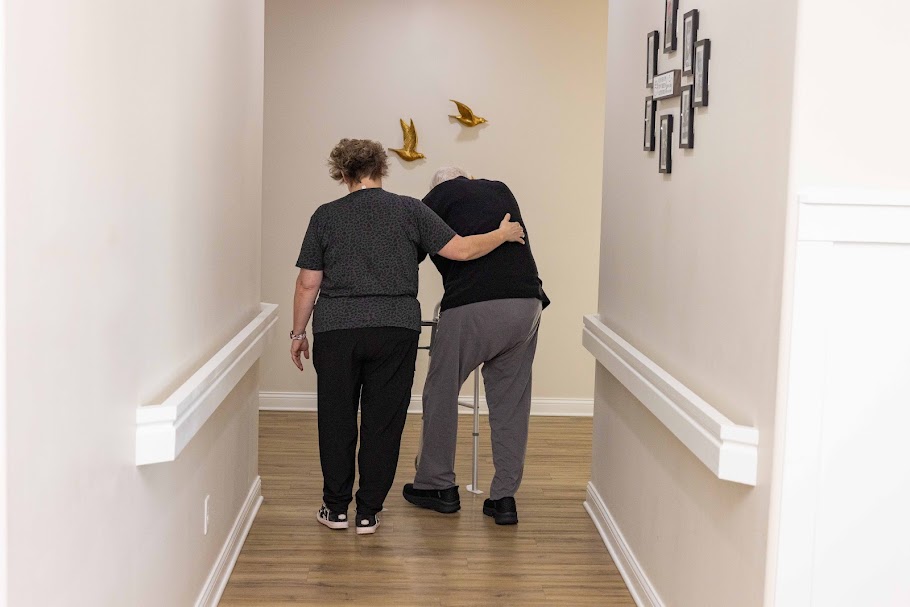
Nobody plans for how hard the days after surgery actually are.
The hospital stay goes fine. The procedure goes well. The surgeon says everything looks good. And then comes discharge day — and suddenly your parent is home, they can barely get up from the couch without help, they can't bathe independently, they need medications at specific times, they shouldn't be climbing stairs, and you're standing in their living room at 7 PM trying to figure out how any of this is going to work.
This is the moment most families realize that coming home from the hospital isn't the end of the hard part. It's the beginning of a different kind of hard.
At Crown Point Assisted Living, we've walked alongside a lot of families through exactly this moment. Short-term respite care after surgery is one of the most practical, most underused options available to Indiana families — and this article explains what it is, when it makes sense, and what recovery actually looks like when someone has the right support around them.
CALL US ABOUT SHORT-TERM RECOVERY CARE
The First Weeks After Surgery Are the Riskiest
Here's something most families don't hear clearly enough at discharge: the weeks immediately after surgery are when things most often go wrong.
For seniors recovering from hip replacement, knee replacement, cardiac surgery, or any major procedure, the transition from hospital to home is the most vulnerable period in the entire recovery process. Mobility is limited. Pain management is complex. The risk of falls is elevated precisely when a person is trying to navigate a home that was never set up for someone who can't put full weight on one leg.
Most hospital readmissions after joint replacement happen in this window — the first 30 to 90 days after discharge. The causes are usually preventable: a fall at home, a missed medication dose, a wound that needed closer monitoring, nutrition that slipped when nobody was making meals. These aren't medical failures. They're the predictable result of sending someone home before the right support is in place.
Respite care exists to bridge exactly this gap.
What Is Respite Care After Surgery?
Respite care, in the context of post-surgical recovery, means a short-term stay at an assisted living community — a few days, a week, several weeks — specifically to support a senior through the recovery period before they're ready to return home and live independently.
It's not a nursing home admission. It's not a permanent move. It's a planned, temporary stay in a place where the right support is already there — meals, medication management, personal care, daily assistance, and trained staff on hand around the clock — so your parent can focus entirely on healing rather than on figuring out how to manage daily life with limited mobility.
Think of it like this: after surgery, your parent's full-time job is recovery. Respite care makes sure everything else gets handled by people who know what they're doing.
Why Home Recovery Is Harder Than It Looks
Families almost always want their parent to recover at home. That instinct is completely natural — home is comfortable, home is familiar, home is where people heal best in an ideal world.
But post-surgical recovery at home for a senior has some real, practical challenges that don't show up in the discharge paperwork.
1. The home wasn't built for this.
A bathroom without grab bars is genuinely dangerous for someone using a walker after hip surgery. A bedroom on the second floor is a problem when stairs are off-limits. A low couch that's hard to get out of under normal circumstances becomes nearly impossible after knee replacement. Most homes need significant modification to be safe for post-surgical recovery — and most families don't have time to do that before discharge day arrives.
2. Family caregivers can't always be there.
The rotating schedule works for a day or two. A spouse who is also aging takes on physical demands that can injure them. Adult children who live an hour away and have jobs and kids of their own can visit, but they can't provide continuous care. And the moments of highest risk — getting up in the night, taking a shower, navigating the transition from bed to chair — are exactly the moments when no one else is around.
3. Pain management and medications are complicated.
Post-surgical pain management often involves multiple medications on specific schedules, with side effects that include dizziness and drowsiness — which directly increase fall risk. Managing this correctly at home requires someone who knows what was prescribed, when it was taken, and what to watch for.
4. Nutrition matters more than families realize.
Healing from surgery requires adequate nutrition — protein especially — at a time when appetite is suppressed, pain medication affects taste and hunger, and the person can't easily prepare their own meals. Poor nutrition after surgery slows wound healing, weakens immunity, and extends recovery time.
5. The emotional side is real too.
Post-surgical recovery is isolating. There's pain. There's frustration with limited mobility. There's anxiety about whether things are healing properly. A senior sitting alone in a house all day while their family is at work is not recovering in the best possible environment — emotionally or physically.
What Respite Care at Crown Point Actually Looks Like
When a senior comes to Crown Point Assisted Living for post-surgical recovery, they arrive to an environment where everything is already set up for exactly what they need.
1. Private room, no stairs, no hazards.
Our home-like setting was designed with safe movement in mind. No loose rugs. Grab bars where they matter. Easy access from bed to bathroom. A space where the physical environment works with recovery rather than against it.
2. Meals three times a day, home-cooked.
After surgery, a senior's body is doing significant work. It needs real food — not meal delivery that shows up cold, not whatever can be easily microwaved. Our kitchen prepares fresh, home-cooked meals daily, and our team can accommodate post-surgical dietary needs and restrictions. Eating together with others in the community also helps with the isolation that makes recovery harder than it needs to be.
3. Medication management, handled.
Our caregivers assist with medication reminders and help residents stay on schedule with their post-surgical prescriptions — including the ones that need to be taken at specific times, with food, or with careful monitoring for side effects. No missed doses. No confusion about what was taken when.
4. Personal care without the awkwardness.
Bathing, dressing, wound care dressing changes, getting in and out of bed — the parts of recovery that are physically hardest and emotionally most difficult to ask family members for help with. Our team handles this professionally, gently, and without making anyone feel like a burden.
5. 24/7 staff, always nearby.
Our 1:6 caregiver-to-resident ratio means someone is genuinely close at all times — not a call button that summons help from down the hall, but caregivers who know each resident and are physically present throughout the day and night. If something changes — pain levels, mobility, confusion, signs of infection — it gets noticed and addressed, not discovered hours later.
6. A calm, home-like atmosphere that supports healing.
Recovery isn't just physical. Being somewhere that feels warm, human, and genuinely caring makes a difference that's hard to quantify but easy to feel. Crown Point isn't a clinical setting. It's a home. And people heal better in homes.
What Surgeries Make Respite Care Worth Considering?
Any surgery that limits a senior's mobility or independence during recovery is worth having the respite care conversation about. The most common situations we support include:
- Hip replacement surgery — one of the most common procedures for older adults, with 450,000 performed in the US annually. Recovery involves significant mobility restrictions, weight-bearing limitations, and a need for careful daily support during the first several weeks.
- Knee replacement surgery — around 700,000 performed each year. Climbing stairs is restricted, getting up from low furniture is difficult, and physical therapy compliance is essential. Having consistent, professional support during this period significantly affects long-term outcomes.
- Cardiac surgery — coronary artery bypass grafting, valve repair and replacement, pacemaker placement. Post-cardiac surgery recovery requires careful monitoring, activity restrictions, and a level of oversight that's difficult to sustain in a home setting without professional help.
- Spinal surgery — restrictions on bending, lifting, and certain movements make daily personal care genuinely difficult. Medication management and positioning support are important.
- Cancer surgery and treatment recovery — the physical and emotional demands of recovery from cancer-related surgery, or from the side effects of chemotherapy and radiation, often leave seniors depleted in ways that make temporary professional support not just helpful but necessary.
- Any major abdominal or orthopedic surgery — if discharge instructions include limitations on driving, lifting, stair use, or bathing independently, those limitations translate directly to a need for support that many home environments can't provide safely.
When Should Families Think About This — Before or After Surgery?
Before. Always before.
The families who navigate post-surgical recovery most smoothly are the ones who plan before the procedure, not in the chaos of a discharge meeting while a surgeon is explaining restrictions and a nurse is reviewing medication instructions and someone is asking about the follow-up appointment.
Planning respite care before surgery means:
- You have time to tour the community and meet the team before it matters
- Your parent can become familiar with the environment before they're in pain and disoriented
- You're not scrambling for a spot when everyone else who had surgery that week is also looking for one
- The transition from hospital to respite care can be smooth and coordinated rather than rushed
Many hospitals work with families on discharge planning and will support a transition to assisted living respite care rather than direct home discharge when it's the right clinical choice. If you're preparing for an upcoming surgery, it's worth having this conversation with the surgical team as part of discharge planning.
What About Families Who Live Far Away?
Respite care is particularly valuable for families where the adult children don't live nearby.
If your parent is in Crown Point and you're in Chicago, Milwaukee, or Indianapolis — close enough to visit but not close enough to provide daily care — a respite stay gives you something that independent home recovery cannot: the knowledge that someone competent and caring is with your parent every day, that meals are happening, that medications are being managed, and that if something changes, it will be caught and addressed.
It removes the constant background worry of "I wonder if they're okay today" and replaces it with actual certainty that they are.
You can visit, focus on being a son or daughter rather than a caregiver, and trust that the daily logistics of recovery are being handled by people who do this every day.
How Long Does Respite Care After Surgery Last?
It depends entirely on the person, the surgery, and how recovery progresses.
Some families plan for two weeks and find their parent is ready to go home after ten days. Others start with a week and extend because the recovery is taking longer than expected or because the transition back home still needs some preparation. There's no fixed timeline — the length of stay adjusts to what the person actually needs.
What's important is that the stay is long enough for the highest-risk phase of recovery to pass. The first weeks after surgery are when falls happen, when complications emerge, when medication adjustments are made. Getting through that window with proper support dramatically changes the trajectory of the entire recovery.
What Families Tell Us After
The conversations we have with families after a respite stay are usually variations of the same thing.
They're relieved. They're grateful. And more often than not, they say they wish they'd known this was an option sooner — that they'd spent the first two weeks after the last surgery scrambling, exhausted, and worried, not knowing there was a better way.
That's the thing about respite care. Families don't know to ask about it until they need it. And by the time they need it, the situation is usually already hard.
If there's a surgery coming up for someone in your family — or if a parent just came home from the hospital and things aren't going the way you hoped — the conversation is always worth having.
How to Plan a Respite Stay at Crown Point Assisted Living
Planning is straightforward. A call or visit is all it takes to start.
We'll talk about the surgery, the expected recovery timeline, what kind of support your parent will need, and what a short-term stay at Crown Point looks like in practice. We can coordinate directly with the hospital discharge team if needed. We'll make sure the room is ready, the care plan reflects the specific recovery needs, and the transition from hospital to our community is as smooth as possible.
There's no pressure, no obligation, and no complicated process. Just an honest conversation about whether this is the right fit for your family.
Frequently Asked Questions
1. What is respite care after surgery?
Respite care after surgery is a short-term stay at an assisted living community specifically to support a senior through post-surgical recovery. It provides professional daily care — meals, medication management, personal care assistance, and 24/7 staff presence — in a safe, home-like environment, so the senior can focus on healing rather than managing daily logistics with limited mobility. Learn more about Crown Point's respite care program.
2. How is respite care different from a nursing home or rehabilitation facility?
Respite care in an assisted living community is a short-term, non-medical support arrangement in a home-like environment. It's distinct from a skilled nursing facility or inpatient rehabilitation center, which provide higher levels of clinical and therapeutic care. Respite care is appropriate for seniors who need personal care support and daily assistance during recovery but don't require intensive medical intervention.
3. How long does a typical respite stay last after surgery?
There's no fixed length — it depends entirely on the surgery, the person's recovery pace, and what the home situation looks like when they're ready to return. Most post-surgical respite stays range from one to four weeks, with the option to extend if recovery is taking longer or the home environment needs more preparation.
4. Does insurance cover respite care after surgery?
Coverage depends on the insurance type and the nature of the stay. Medicare generally does not cover long-term assisted living respite stays, but some Medicare Advantage plans, long-term care insurance policies, and veterans' benefits may provide partial or full coverage for short-term care. It's worth checking the specific policy. Our team is happy to have a transparent conversation about costs during your initial call.
5. What surgeries most commonly lead families to consider respite care?
Hip and knee replacement are the most common, followed by cardiac surgery, spinal surgery, and major abdominal procedures. Any surgery that significantly limits a senior's mobility, ability to perform self-care, or safe navigation of a home environment for several weeks is a candidate for respite care support.
6. Can my parent come to Crown Point directly from the hospital?
Yes. We can coordinate with the hospital discharge team to arrange a direct transition from hospital to our community. Planning this in advance — ideally before the surgery date — makes the transition smoother for everyone. We can also accept admissions on relatively short notice when circumstances don't allow for advance planning.
7. Will my parent have to share a room during respite care?
At Crown Point Assisted Living, we provide private rooms for our residents, including those staying for short-term respite care. Your parent will have their own comfortable, private space during their recovery stay.
8. What if my parent decides they want to stay permanently after the respite stay?
That happens — and we think of it as a good outcome when it does. Some families come for respite care and find that the transition to full-time assisted living happens naturally and comfortably, because the parent has already settled in, knows the staff, and feels at home. There's never any pressure in that direction, but if it's the right fit, the transition is easy because the hard part of adjustment is already done. Learn more about our assisted living services.
Crown Point Assisted Living is located at 1550 S. Feather Rock, Crown Point, IN 46307. If you're planning a surgery or navigating post-surgical recovery right now, call us at (219) 500-1550 or contact us online. We're happy to talk through your situation and help you figure out whether a respite stay makes sense.