
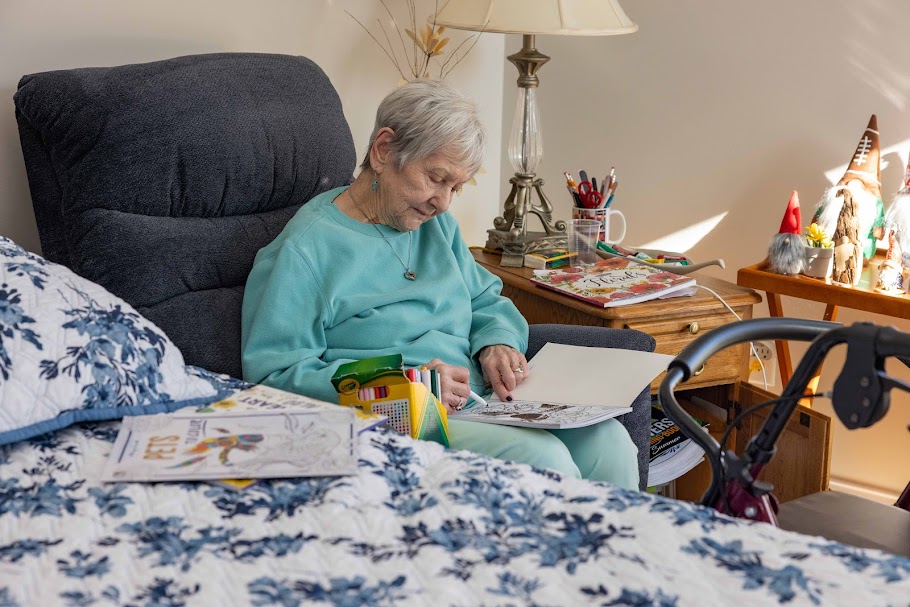
Choosing between assisted living and staying at home is one of the hardest decisions a family will ever face. There's no universal right answer — and anyone who tells you otherwise isn't being honest with you. What works depends on your loved one's specific needs, your family's capacity, and what "quality of life" genuinely means to the person at the center of it all.
This guide doesn't push you toward one option. Instead, it lays out the real trade-offs — clearly and honestly — so you can make the decision with confidence.
Why This Decision Is So Hard
Most families don't approach this question rationally. They approach it emotionally — and that's completely understandable.
There's guilt on one side: "I should be able to take care of Mom myself." There's fear on the other: "What if she's lonely? What if the staff don't really care?" And underneath it all, there's often exhaustion — the kind that builds slowly over months or years of caregiving until it's hard to think clearly about anything.
The goal of this article is to cut through the noise and give you the clearest possible picture of what each option actually looks like day to day — so the decision feels less like a moral judgment and more like a practical plan.
What "Staying at Home" Actually Looks Like
Staying at home sounds simple. It isn't.
For a senior with moderate or higher care needs, remaining at home safely usually requires a significant infrastructure of support — family caregivers, professional home health aides, meal delivery, transportation coordination, medication management, and home modifications like grab bars, stair lifts, and ramp access.
When that infrastructure is solid and sustainable, staying at home can be a genuinely good option. When it starts to crack — through caregiver burnout, coverage gaps, or escalating medical needs — it can become a daily safety risk.
Staying at home tends to work well when:
- The senior has mild care needs and strong physical mobility
- A dedicated family caregiver is available, nearby, and not yet overwhelmed
- The home has been modified appropriately for safety
- Social connection is maintained through regular visitors, activities, or community groups
- Medical needs are stable and manageable with scheduled appointments
Staying at home starts to break down when:
- Care needs grow into hands-on daily assistance (bathing, dressing, transfers, toileting)
- Nights become unsafe — wandering, falls, frequent wake-ups
- Medication routines become complex or frequently missed
- The primary caregiver is stretched thin, exhausted, or showing signs of burnout
- Social isolation increases and mood or cognitive health declines
What Assisted Living Actually Looks Like
Assisted living is often misunderstood. Families sometimes picture a sterile nursing facility where residents spend their days in hallways, waiting. That picture — for a quality assisted living community — is simply not accurate.
Modern assisted living, especially in smaller, home-like settings, is designed to feel like home because it is home. Residents have their own private spaces, their own routines, and a community of peers around them. Staff are there to help — not to take over — and care plans are built around what each resident actually needs, nothing more.
At Crown Point Assisted Living, for example, residents receive help with daily activities like bathing, dressing, and medication reminders while still maintaining independence in everything they're capable of managing on their own. Meals are home-cooked. Activities are personalized. And staff work a 1:6 caregiver-to-resident ratio — meaning your loved one is never lost in a crowd.
Assisted living tends to work well when:
- Daily care needs have grown beyond what one family caregiver can safely manage
- Safety risks at home — falls, missed medications, wandering — are increasing
- Social isolation is affecting mood, motivation, or cognitive health
- The senior would benefit from consistent routine, structured meals, and daily engagement
- Family caregivers are approaching or already experiencing burnout
Assisted living may not be the right fit yet when:
- Needs are minimal and the senior is managing independently with light support
- A strong, sustainable home support system is genuinely in place
- The senior is firmly opposed and there is no immediate safety concern
A Side-by-Side Honest Comparison
|
Staying at Home |
Assisted Living |
|
|
Daily Care |
Dependent on family or hired help; can have gaps |
Consistent, professional support built into every day |
|
Safety |
Varies significantly based on home setup and caregiver availability |
Designed for senior safety; staff available 24/7 |
|
Meals |
Family prepares, delivers, or uses meal services |
Home-cooked, nutritious meals served daily |
|
Social Connection |
Can become limited, especially if mobility declines |
Built-in community, activities, and daily peer interaction |
|
Medical Oversight |
Relies on scheduled appointments and family monitoring |
Staff monitor daily health changes and coordinate with physicians |
|
Caregiver Wellbeing |
High risk of burnout over time |
Family shifts from caregiver to visitor — relationship improves |
|
Cost |
Varies widely; can be deceptively high when adding aides, modifications, and coordination |
Predictable monthly cost covering most daily needs |
|
Familiarity |
High — the senior knows their home |
Requires adjustment, but most residents settle in within weeks |
|
Flexibility |
Care can be adjusted gradually |
Care plans adjust as needs change within the community |
|
Cognitive Stimulation |
Depends entirely on family effort and external activities |
Daily programs designed to support brain health and engagement |
The Question Families Don't Ask (But Should)
Most families ask: "Is Mom safe enough to stay home?"
That's the wrong question — or at least, it's incomplete.
The better question is: "Is this sustainable?"
A senior can be "safe enough" at home today and in a crisis next month — because safety at home is often held together by a family caregiver who is running on empty, a home health aide whose schedule just changed, or a set of circumstances that can unravel quickly.
Assisted living isn't just about the senior's safety today. It's about building a stable, consistent care environment that doesn't depend on everything going right every single day.
What About Cost?
Cost is one of the most common reasons families hesitate on assisted living — and it deserves an honest look.
Staying at home feels less expensive because costs are spread out and often invisible. But when you add up professional home health aides (which can run $25–$35/hour in Indiana), meal delivery services, transportation costs, home modification expenses, and the hidden cost of family caregivers reducing work hours or leaving jobs entirely, home care is often more expensive than families realize.
Assisted living consolidates those costs into a single monthly rate that covers housing, meals, care, activities, housekeeping, and laundry. It isn't cheap — but it is often more financially straightforward than families expect once they do the full comparison.
Financial options that may help cover assisted living costs include long-term care insurance, veterans' benefits, Medicaid waiver programs (Indiana's CHOICE program, for example), and the proceeds from selling a family home. A financial advisor familiar with senior care planning can help your family map out what's realistic.
The Transition: What the First Month Really Looks Like
One of the biggest fears families have about assisted living is that their loved one will be miserable — that they'll sit alone in a room, feel abandoned, and never adjust.
This fear is understandable, but it rarely matches reality.
Most residents go through a genuine adjustment period in the first two to four weeks. There may be some sadness, some resistance, some moments of "I want to go home." This is completely normal and doesn't mean the decision was wrong.
What tends to happen after that adjustment period, consistently, is this: routines form. Meals become a social anchor. Familiar faces become friends. Staff learn preferences, quirks, and stories. And many families report that their loved one — the one who swore they'd never move — starts to thrive in ways they hadn't seen in years.
The engagement, the structure, the social connection, and the professional daily support create an environment that home care, however loving, often simply cannot replicate.
When Families Wish They'd Made the Decision Sooner
If there's one thing families consistently tell us after a loved one moves into assisted living, it's this: "I wish we hadn't waited so long."
The wait is usually driven by guilt, by hope that things will improve, or by a loved one's firm resistance. But the families who wait until a fall, a hospitalization, or a crisis to make the move often find the transition much harder — because their loved one is now recovering from an injury or health event at the same time as adapting to a new environment.
The families who plan ahead — who tour, ask questions, get on waitlists, and make a thoughtful decision before a crisis forces their hand — almost always report a smoother, calmer transition for everyone involved.
Questions to Ask Yourself Right Now
If you're weighing this decision, these questions can help bring clarity:
- If my loved one fell tonight, would someone find them quickly enough?
- Is the primary caregiver able to sustain this level of support for another 12 months without significant personal cost?
- Is my loved one socially engaged, mentally stimulated, and emotionally connected — or isolated and withdrawn?
- Are we managing care proactively, or are we constantly reacting to the next problem?
- Would my loved one's quality of life — not just safety — genuinely be better with more consistent support and community around them?
There are no trick questions here. Some families will answer these and realize home care is still the right path. Others will recognize that what they've been calling "managing" is actually something closer to surviving.
How Crown Point Assisted Living Can Help
At Crown Point Assisted Living, we don't pressure families. We know this decision takes time, and we know it's emotionally charged. What we offer is clarity — a chance to see what daily life looks like here, ask every question on your mind, and understand whether we're the right fit for your loved one's specific needs.
Our assisted living services are built around personalized care plans, home-cooked meals, 24/7 trained staff, and a community that genuinely feels like family. We also offer memory care, respite care, and adult day care — so families have flexible options at every stage of the journey.
If you're not sure whether the time is right, come see us. Bring your loved one. Walk the halls. Meet the staff. Let the visit do the work — and we'll be honest with you about whether we think we can genuinely help.
Frequently Asked Questions
1. Is it better for a senior to stay at home or go to assisted living?
There's no universal answer — it depends entirely on the individual's care needs, safety situation, social well-being, and the sustainability of their current support system. This article outlines the key factors to consider, but the most important step is an honest assessment of the current situation, including whether it is genuinely sustainable long-term.
2. At what point should someone move into assisted living?
Common indicators include increasing safety risks at home (falls, missed medications, wandering), caregiver burnout, social isolation, difficulty with daily activities like bathing and dressing, and cognitive changes that require structured supervision. Most families benefit from exploring options before a crisis rather than waiting until one forces the decision.
3. How do I convince a parent to consider assisted living?
Focus on safety and quality of life rather than framing it as "giving up independence." Use specific recent examples that illustrate your concerns. Offer to visit together — many seniors who resist the idea in the abstract respond differently after an in-person tour. Emphasize that the goal is more support, not less freedom.
4. Is assisted living covered by Medicare or Medicaid in Indiana?
Medicare generally does not cover assisted living costs. Medicaid may cover some costs through Indiana's CHOICE waiver program for eligible residents. Long-term care insurance, veterans' benefits, and private funds are the most common payment sources. We encourage families to consult a senior care financial advisor for guidance specific to their situation.
5. What is the difference between assisted living and a nursing home?
Assisted living supports seniors who need help with daily activities but do not require around-the-clock skilled medical nursing care. Nursing homes provide higher-level medical care for residents with significant health conditions. Many families find that assisted living meets their loved one's needs while offering a much more home-like environment. Learn more in our guide: Assisted Living vs. Nursing Homes.
6. Can a couple stay together in assisted living?
Yes. Many assisted living communities, including Crown Point Assisted Living, accommodate couples in shared or adjoining private rooms. This is one of the most common questions we receive from families, and it's one we're always happy to discuss during a tour.
7. How long does it take to adjust to assisted living?
Most residents go through an adjustment period of two to four weeks. During this time, some sadness or resistance is completely normal. After routines form and relationships develop with staff and fellow residents, the vast majority of residents settle in comfortably — and many families report seeing improvements in mood, engagement, and overall well-being that genuinely surprised them.