
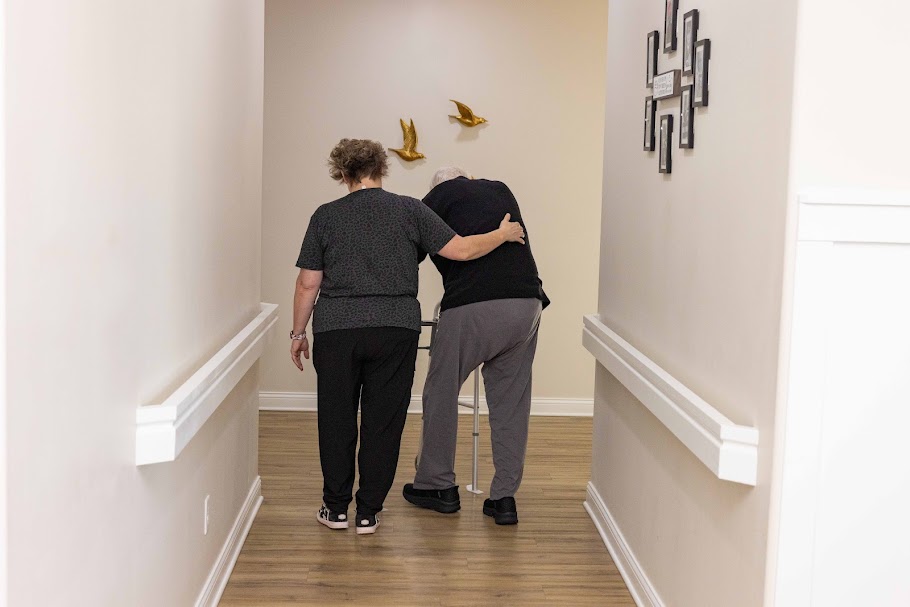
Caring for an aging parent or loved one at home can start with good intentions—but when care needs grow, the risks grow too. Falls, medication mistakes, missed meals, and unsafe moments often happen when families are stretched thin and caregiving becomes a 24/7 responsibility.
That’s why families choose Crown Point Assisted Living—because your elder deserves safe, consistent daily support in a setting designed for comfort, dignity, and supervision. Here, seniors receive help with everyday needs like bathing, dressing, mobility, and medication reminders—without losing the feeling of independence. And families finally get peace of mind knowing their loved one is supported every day, not just when someone is available.
If you’ve started noticing caregiver burnout or safety concerns at home, this guide will help you understand the risks—and recognize when assisted living becomes essential.
When Love Becomes Overload: Why Caregiver Burnout Happens So Often
Most caregivers don’t plan to become full-time caregivers. It often begins with simple help—rides to appointments, cooking, small reminders. Then needs shift. A fall happens. A diagnosis changes. Mobility declines. Memory becomes less reliable. Suddenly, what used to be occasional help turns into constant supervision.
Caregiver burnout happens when the responsibilities outgrow the caregiver’s capacity. Capacity isn’t just time—it’s sleep, physical strength, emotional patience, mental clarity, and personal health. When any of those run low, safety becomes harder to maintain. Not because the caregiver doesn’t care—but because the situation now requires more support than one person can safely provide.
Burnout tends to accelerate in these situations:
- Care needs expand into hands-on help (transfers, bathing, toileting, mobility)
- Nights become unpredictable (frequent wakeups, wandering, confusion)
- Medication routines become complicated (multiple prescriptions, timing changes)
- The caregiver is balancing work, kids, or their own health
- Support from family is inconsistent or unavailable
Burnout isn’t a sign that you’re failing. It’s a sign that the care plan needs to change.
The Burnout-to-Safety-Risk Chain: How Problems Start Quietly
Burnout rarely shows up as one dramatic moment. It usually builds quietly—until safety becomes fragile.
Here’s the pattern many families experience:
- Sleep breaks down: Night bathroom trips, anxiety, confusion, or restlessness keep the caregiver up.
- Decision fatigue grows: Every day includes dozens of micro-decisions: meals, meds, hygiene, movement, appointments, mood changes.
- Physical strain increases: Transfers, stairs, lifting, and constant vigilance wear down the body.
- Emotional bandwidth shrinks: Patience gets shorter. Conflict increases. Stress becomes constant.
- Safety steps slip: Not because you’re careless—because you’re overloaded.
That’s when “small” issues become real risks: a missed medication dose, a rushed transfer, a fall during a shower, a stove left on, or a delayed response to a health change. When caregiving demands perfection every day, it becomes unsafe—because no one can be perfect under chronic stress.
Signs of Caregiver Burnout You Shouldn’t Ignore
Burnout can look different for each person, but there are common warning signs that show the load has become too heavy.
1. Physical warning signs
- Constant tiredness even after resting
- Frequent headaches, back pain, muscle strain
- Getting sick more easily
- Appetite changes (skipping meals or stress eating)
- Increased reliance on caffeine just to function
2. Emotional warning signs
- Irritability or anger that feels “not like you”
- Feeling numb, detached, or emotionally drained
- Anxiety spikes, especially when leaving your loved one alone
- Guilt that doesn’t go away—even when you’re doing everything
- Feeling trapped or hopeless
3. Practical and behavioral warning signs
- Forgetting appointments, tasks, or medication timing
- Feeling overwhelmed by daily routines you used to manage
- Avoiding calls, texts, or visitors because you can’t handle “more”
- Frequent arguments with your loved one or other family members
- Neglecting your own health needs
These signs are not character flaws. They’re signals that support is needed—before burnout turns into a crisis.
The Safety Risks That Increase When Burnout Sets In
Caregiver burnout isn’t just stressful—it can be dangerous. Safety risks increase because the care needs are often complex, continuous, and physically demanding.
1) Falls and mobility accidents
Falls are one of the biggest safety threats for seniors, especially when:
- Walking becomes unsteady
- Balance declines
- Mobility aids are inconsistently used
- Transfers require hands-on help
Many falls happen during routine moments:
- Getting in and out of bed
- Standing up from a chair
- Getting to the bathroom at night
- Showering or changing clothes
- Navigating stairs or tight spaces
Burnout increases fall risk because caregivers may be tired, rushing, or physically strained. Even a moment of distraction can lead to a serious injury.
Assisted living support becomes essential when mobility supervision is needed daily—especially if transfers or bathroom trips have become high-risk.
2) Medication mistakes
Medication management can become overwhelming fast—especially after hospital visits, new prescriptions, or multiple doctors.
Burnout increases the risk of:
- Missed doses
- Double dosing
- Incorrect timing
- Confusing similar pill bottles
- Running out of a medication unexpectedly
If you’re constantly worried about medication errors, it often means the system is too fragile. Assisted living support can add consistent medication reminders and routine-based follow-through, reducing the chance of preventable harm.
3) Poor nutrition and dehydration
Nutrition and hydration are easy to overlook when the day is chaotic. Many caregivers notice gradual decline:
- Meals become irregular or skipped
- Seniors lose weight slowly over months
- Hydration drops, leading to weakness or confusion
- Constipation becomes frequent
- Energy levels fall, increasing fall risk
Caregivers can struggle with cooking, grocery planning, special diets, or simply finding the time to ensure consistent meals.
In assisted living, meals and hydration routines become structured and dependable, which can stabilize day-to-day health.
4) Hygiene struggles and skin risks
Bathing and toileting support are among the hardest caregiving tasks—physically and emotionally. When caregivers are burned out, hygiene can become inconsistent because it requires time, patience, and hands-on help.
Risks that can increase:
- Skipped showers and grooming
- Clothing not changed regularly
- Skin irritation or breakdown
- Increased risk of infections
- Loss of dignity that creates resistance or conflict
Assisted living support helps seniors maintain consistent personal care in a respectful, routine-driven way—without the stress and tension that can build at home.
5) Cognitive safety risks: wandering, confusion, and unsafe choices
Cognitive changes can create constant risk—even if your loved one seems “fine” some days.
Common risks include:
- Wandering outside and getting lost
- Turning on the stove and forgetting
- Taking medication incorrectly
- Leaving doors unlocked
- Falling for scams or unsafe decisions
When cognitive supervision becomes necessary, burnout rises quickly because the caregiver must be “on” all the time. Assisted living becomes essential when safety depends on 24/7 awareness.
6) Delayed response to emergencies or health changes
Burnout can cause caregivers to miss subtle warning signs:
- Increased confusion (often an early sign of infection or dehydration)
- New weakness or imbalance
- Reduced appetite
- Unusual fatigue
- Mood changes that signal discomfort or illness
It’s not that caregivers don’t care—it’s that they’re exhausted and juggling too much. Assisted living support helps reduce the time between “something’s off” and “someone notices.”
The Tipping Points: When Assisted Living Support Becomes Essential
Many families wait because they hope things will improve or stabilize. But there are specific tipping points that strongly signal it’s time to consider assisted living—because safety is no longer dependable at home.
1) Nights are becoming unmanageable
If your loved one:
- wakes frequently
- needs help multiple times overnight
- wanders or becomes confused
- is at fall risk on nighttime bathroom trips
…then your sleep is disrupted, and your ability to keep them safe during the day declines. When nights fall apart, burnout accelerates fast—and so do safety risks.
2) Transfers, toileting, or bathing require physical strength you can’t sustain
If you’re doing daily lifting or hands-on transfers, the risk isn’t just to your loved one—it’s to you too. A caregiver injury can instantly turn the situation into an emergency.
Assisted living becomes essential when physical care needs are constant and cannot be safely provided by one person.
3) You can’t leave them alone without fear
If you’re anxious leaving for groceries, work, or even a short walk, you’re already in a high-risk care situation. This isn’t overthinking—it’s your instincts recognizing that safety requires more coverage.
4) “Close calls” are happening more often
A fall scare. A missed medication dose. A wandering incident. A stove left on. These moments are warnings. When they start repeating, it’s no longer about luck—it’s about the care environment not matching the level of need.
5) Caregiving is damaging your health or relationships
If caregiving is leading to chronic stress symptoms, anxiety, depression, high blood pressure, or major family conflict, the situation is no longer sustainable.
Assisted living support is not a failure—it’s a protective step for everyone involved.
Why Assisted Living Often Works Better Than Patchwork Help
Many families try to solve burnout by adding bits of support at home. Sometimes it helps, but often caregivers still feel like the “system manager”—filling gaps, coordinating schedules, and responding to emergencies.
Challenges families commonly face with patchwork help:
- Coverage gaps (especially nights and weekends)
- Last-minute cancellations or inconsistent staff
- Increased coordination stress
- Care still depends on the caregiver being available
- Safety still collapses when the caregiver is exhausted
Assisted living offers consistent structure: daily routines, built-in support, and a safer environment designed for aging needs.
What Changes When Your Loved One Moves Into Assisted Living
Assisted living isn’t about taking life away from someone. It’s about replacing constant risk with consistent support.
Families often notice these improvements:
1. More stable daily routines
Daily rhythm matters: meals, hydration, movement, rest, and hygiene. When routines stabilize, seniors often feel more secure—and families feel less panic.
2. Less risk during high-risk tasks
Transfers, bathing, dressing, and medication routines become safer when support is consistent and planned.
3. A safer environment by design
Assisted living settings are built around senior needs: fewer hazards, more accessibility, and support available when needed.
4. A better family relationship
When you’re not managing every difficult daily task, you can show up differently—as a spouse, son, daughter, or family member again. Many families feel relief when their time together becomes calmer and more meaningful.
How to Start the Conversation Without Triggering Defensiveness
This is a sensitive topic. Seniors may fear losing independence, and caregivers may fear guilt or judgment. The goal is to talk about safety and support—not “taking control.”
Approaches that tend to work:
- Start with goals: “I want you safe and supported.”
- Use real examples: “The fall scare last week really frightened me.”
- Avoid blaming language: Replace “You can’t” with “We need more support.”
- Acknowledge feelings: “I know this is hard to talk about.”
- Focus on exploration: “Let’s visit and see what it’s like.”
You’re not trying to win an argument—you’re trying to build a safer plan.
A Quick Self-Check: Are We Managing, Or Are We Hoping?
Ask yourself honestly:
- If nothing changes, can I keep doing this safely for 6 more months?
- If I got sick, who would take over immediately?
- Do I feel more anxious than confident most days?
- Are we one incident away from a crisis?
If your answers point toward worry and uncertainty, it’s not too early to explore assisted living. It’s often the safest time—because you can make decisions before an emergency forces them.
Choosing Crown Point Assisted Living: Safety, Support, and Peace of Mind
When caregiving burnout meets increasing safety risks, families need more than advice—they need dependable support. Crown Point Assisted Living is designed for seniors who need help with daily life while still maintaining dignity, comfort, and a sense of independence.
The biggest difference families often feel isn’t just the support for their loved one—it’s the relief of knowing safety doesn’t depend on one exhausted person anymore. Instead of constantly reacting to the next risk, you can move forward with a plan built around consistent daily care.
If you’re starting to recognize burnout, fear, or repeated close calls, don’t wait for a crisis to make the decision for you. The safest step is often the one you take before something goes wrong.